


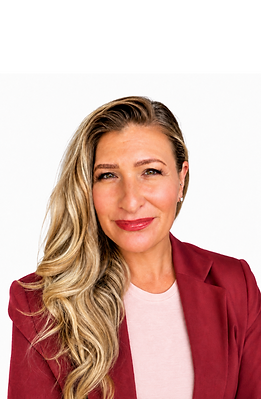
MELISSA MALTAR
Social Worker, Psychotherapist

MEET MELISSA
I'm a social worker and psychotherapist with over two decades of experience specializing in supporting children, adolescents, young adults, and their families through the challenges of interpersonal violence, including sexual, physical, and emotional abuse, neglect, and domestic violence. With a particular focus and commitment to helping families navigate intrafamilial sexual abuse (specifically, sibling sexual abuse), adolescent sexually harmful behaviours, and problematic sexual behaviours with children under 12 years, I have honed my skills in both assessment and treatment in these critical areas. I am the proud recipient of the Jim Shea Memorial Award 2024 for outstanding contributions to the growth and well-being of clients, staff and service providers. Over the past 16 years, I have also made substantial contributions to professional education, creating content and leading both brief and intensive training sessions to support organizations and regions develop clinical specialization. My trainings cater to professionals and adult learners across Canada and internationally, with an aim of fostering passion and deepening expertise in my areas of specialization. I enjoy supporting professionals who are developing their clinical skills via consultation and clinical supervision and I am very fond of supporting milieu settings such as foster homes and live-in treatment settings develop trauma informed and relational approaches to intervention. I have a bachelor degree of Social Work from Toronto Metropolitan University (formerly Ryerson University) and a Master of Social Work degree from The University of Toronto. I hold professional affiliations with: - Ontario College of Social Workers and Social Service Workers - Ontario Association of Social Workers - Canadian Association of Social Workers - New Brunswick Association of Social Workers - Association for the Treatment and Prevention of Sexual Abuse I am also certified and specialize in the Neurosequential Model of Therapeutics and the Neurosequential Model of Reflection and Supervision. I have further training in Cognitive Behavioural Therapy, Schema Therapy, Trauma-Focused Cognitive Behavioural Therapy, Dialectical Behavioural Therapy, Emotion Focused Family Therapy, Cognitive Processing Therapy, Emotion Focused Therapy, Sensory Processing, Equine Facilitated Psychotherapy, as well as many other therapeutic modalities which enhance my eclectic approach to therapy and clinical supervision.
CLINICAL SERVICES OFFERED

PSYCHOTHERAPY
Online & In-Person
I have over 20 years of psychotherapy experience supporting children, youth, young adults, adults and families. I hold expertise in child abuse treatment and prevention, children and adolescents who have engaged in sexually abusive behaviours, and sibling sexual abuse. This experience has change how I see the world in a couple of ways: (1) Really bad things can happen to children more often than you think in Canada; (2) Healing from child abuse and abusive behaviour is hard but very possible and the human spirit wants health and peace; (3) Sexual abuse is preventable and needs much more advocacy and education in Canada to prevent it; and (4) A big part of my job is to hold hope for families. It is a career that has allowed me to maintain passion and perseverance that individuals and families can create change for themselves and their future generations. I am interested in supporting: -Adult survivors of sexual assault or childhood sexual abuse -Adult survivors of sibling sexual abuse -Adolescents and young adults who have experienced trauma -Helping professionals who are experiencing burnout, compassion fatigue or vicarious trauma -Adolescents and young adults involved in the criminal justice system I offer services both virtually and in person. I have an office currently located in Georgetown, Ontario.

TRAINING
Online & In-Person
For the past 16 years, I have been heavily involved and love creating training content that allows clinicians to feel that gaining specialization in trauma and sexual abuse prevention is attainable. During the 2023-2024 fiscal year, The Clinical Collective faculty trained over 4,100 attendees and almost 10,000 attendees since 2021, not including the many thousands of clinical consultations we've done. This opportunity has allowed me to meet so many wonderful clinicians and programs across Canada. No one owns these specialized areas, so I invite you and your organization to join, learn, encourage, collaborate, and share knowledge. I am inspired by Bruce Perry, who says, "Relationships are the agents of change and the most powerful therapy is human love. People, not programs, change people”. I enjoy developing content for and training on the following topics: - Trauma informed care - Creating emotional and behaviour regulation - Understanding how brains are impacted by trauma and how to recognize state dependent functioning - Case conceptualization and formulation - How to create a model of safety and containment when working with dysregulated and traumatized individuals - Trauma processing for children and youth - Assessment and treatment of trauma - Assessment and treatment of adolescents who have engaged in sexually abusive behaviours - Assessment and treatment of children under 12 who have engaged in concerning sexual behaviour - Sibling sexual abuse and reunification - The VORS (Voice, Openness, Responsibility, and Safety) Principles

CLINICAL CONSULTATION
Online & In-Person
Interpersonal abuse, especially sexual abuse, sibling sexual abuse, interfamilial sexual abuse, adolescent sexual harming behaviour, and concerning sexual behaviour by children under 12 years, is a complicated family dynamic for a service system to navigate, especially since sexual abuse allegations represent about 3-5% of child welfare reports, despite the knowledge that sexual abuse occurs much more frequently within families and communities. The Clinical Collective provides consultation to child welfare, children’s mental health professionals, and training attendees on case-specific questions. We provided consultation on issues related to intrafamilial sexual abuse, safety planning after sexual abuse, family reunification, sexual behaviour among siblings, disclosure responses, and resources for families.

CLINICAL SUPERVISION
Online & In-Person
Clinical supervision is a professional obligation for social workers in order to practice ethically and competently. A growing number of organizations in Ontario (especially within the current landscape of creating large amalgamated and consolidated community based organizations) no longer provide clinical supervision of direct practice through a direct manager. Supervision in these settings is often focused on administrative tasks (such as, record keeping, accreditation, mandate, caseload, organizational policies) and NOT clinically complex issues associated with assessment, intervention, evaluation of client interventions, and most importantly, critical self-reflection, which must accompany psychotherapy and social work practice. Moreover, social workers may not be provided with supervision by a member of their profession in these settings, and as such, this creates extra cognitive labour to assess the direct supervisor's relevant expertise, experience, and understanding of social work values, ethics and standards of practice. As a result social workers have felt on their own when it comes to clinical supervision of direct practice and even more so if they work within generalist or large mental health settings and are having to navigate complex trauma, family violence, sexual abuse, sexually harming behaviours, intrafamilial sexual abuse (incest), concerning sexual behaviours exhibited by children, etc. As well, often social workers feel an immense responsibility to prevent ongoing harm, increase safety, and reduce symptomatology with these cases which is incredibly stressful for a professional and impacts the longevity and energy in this field. They also worry about the significant weight and responsibility their organization and community places on them in decision making and consultation if they acquire specialized knowledge in these areas. Over the last 10 years, I have been sharpening my skills related to social work clinical supervision of direct practice and mentoring social workers. I primarily use a Neurosequential Model of Supervision and Reflection which allows for a wellspring of problem solving, generating new ideas, perspective change, invention, advancing one's professional work, processing experiences, etc. Supporting others with this model is guided by awareness of the stress response systems, and attention to regulatory states, co-regulation, and state dependent functioning. I am also inspired by the work of Donald A. Schon and Peter Fonagy. I also offer clinical supervision to agency-based settings.

COMMUNITY OF PRACTICE
Online & In-Person
The Clinical Collective has extensive experience supporting community-based organizations across Canada with creating Community of Practice groups. Working with children and youth who have experienced trauma and/or engaged in sexually harmful behaviour is demanding work that requires specialized skills and knowledge. It is work that is best done in a team approach, particularly when clinicians are learning to do this work. Establishing a Community of Practice is one way to support the work and development of the clinical staff. Etienne Wenger defined communities of practice as, “Groups of people who share a concern or a passion for something they do and learn how to do it better as they interact regularly”. The intention of a Community of Practice is to support the learning obtained in training, to enhance the skill set of the clinicians, to provide a space to share information and discuss issues and engage in reflective practice. It needs to be a place where clinicians feel comfortable in sharing their issues and vulnerabilities as they learn together to do this work.
CONTACT
If you are seeking assistance with training, clinical consultation, clinical supervision, or psychotherapy, I am here to help. Please do not hesitate to contact me for further information.
OFFICE LOCATION:
Spudic Maltar Therapy Collective
232A Guelph Street, Unit 208
Georgetown, ON, L7G 4B1
***BY APPOINTMENT ONLY, NO WALK-INS***
